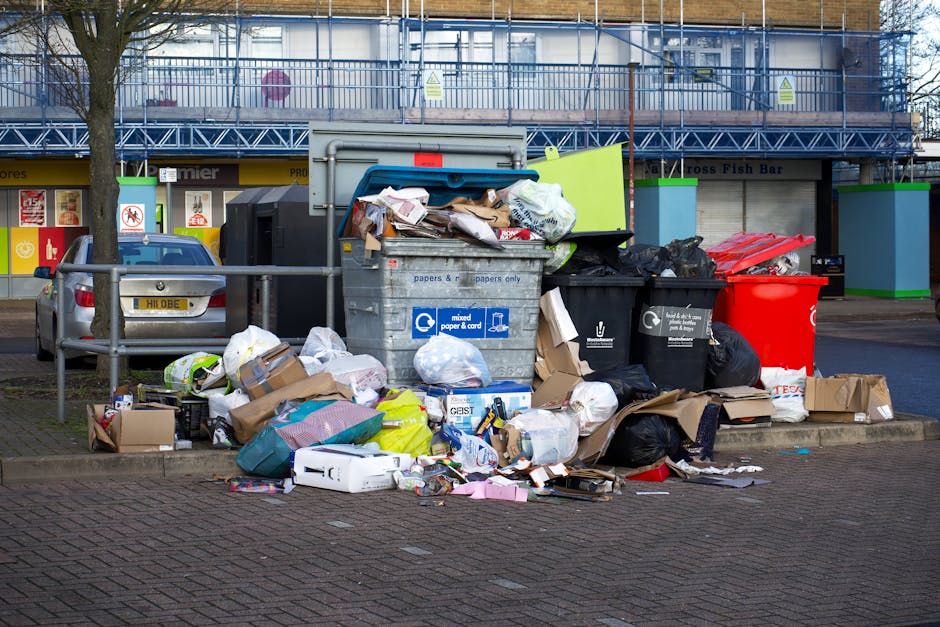
What to know about awkward access rubbish jobs in Amersham

If you are dealing with a sofa that will not fit through the stairwell, a wardrobe wedged in a tight hallway, or builders' waste sitting at the back of a narrow property, awkward access rubbish jobs in Amersham can feel more complicated than the clutter itself. Truth be told, the rubbish is only half the problem. The real issue is getting it out safely, cleanly, and without turning your home, garden, or driveway into a scene of bumps, scuffs, and stress.
This guide explains what awkward access rubbish jobs are, why they matter, how they are usually handled, and what to check before anyone starts lifting. It also covers common pitfalls, practical planning tips, and the sort of details people often miss the first time around. If you are weighing up a house clearance, a one-off bulky item removal, or a larger rubbish job with limited access, you will find a lot here that saves time later.
Expert summary: awkward access does not automatically mean difficult access in the end. With the right preparation, clear measurements, and a sensible removal plan, many tight jobs are manageable, even in older Amersham homes with narrow stairs, split levels, side passages, or small parking spaces.
Why awkward access rubbish jobs in Amersham matter
Amersham has plenty of properties where access is not straightforward. Some are older homes with narrow staircases and tight turns. Some flats have shared hallways, limited parking, or awkward lift dimensions. Others sit behind gardens, side gates, garages, or outbuildings that make loading slower than usual. Add bulky furniture, heavy waste, or mixed items, and suddenly a simple rubbish job needs a proper plan.
Why does this matter so much? Because poor access can lead to avoidable damage, slower collections, higher labour effort, and more disruption for everyone involved. You do not want scratched floors, dented plaster, blocked neighbours, or a van blocking a lane because nobody checked the exit route. In our experience, the jobs that go smoothly are the ones where access gets discussed early, not after the team has arrived and everyone is staring at a staircase with a slightly nervous expression.
It also matters for safety. A narrow passage, uneven steps, low ceilings, or a steep garden path can change how items need to be moved. That affects the number of staff needed, whether dismantling is sensible, and whether a trolley, sack truck, or extra protective materials should be used. Small detail? Not really. It is the difference between a tidy clear-out and a very long morning.
If your job is part of a wider property clear-out, you may also want to consider related services such as house clearance, home clearance, or flat clearance when the access issues are affecting multiple rooms rather than a single item.
Key point: awkward access does not just affect how rubbish is removed. It shapes the timing, manpower, equipment, and care needed for the entire job.
How awkward access rubbish jobs work
The process usually starts with a quick assessment of the property and the items to be removed. That may happen over the phone, by photos, or during a visit, depending on how complex the job is. The aim is to work out how waste will leave the property, where the vehicle can park, and whether anything needs to be dismantled before moving it.
A typical awkward access rubbish job might involve one or more of these steps:
- Checking the route. Measure doorways, halls, stair turns, gate widths, and any tight corners.
- Identifying obstacles. Look for low ceilings, fragile surfaces, steep steps, soft lawns, shared corridors, or locked entrances.
- Separating items. Decide what is going, what is staying, and whether anything needs sorting before the team arrives.
- Planning tools and labour. Consider whether two people are enough or whether more hands, protective covers, or handling equipment are needed.
- Removing items carefully. The team works from the easiest route out, not the most obvious route. That sometimes means a side entrance rather than the front door.
- Loading and disposal. Waste is loaded efficiently, then taken for reuse, recycling, or disposal depending on what it is.
For jobs involving mixed waste, it may help to look at the broader waste removal service, or more specific pages such as furniture clearance, furniture disposal, or garage clearance if the access problem is tied to a single area.
The real trick is that awkward access jobs are rarely about brute force. They are about route planning. A skilled team will look at the property like a puzzle: which piece moves first, which item must be dismantled, and which exit causes the least disruption. Simple in theory, a bit fiddly in practice. That is the point.
Key benefits and practical advantages
When an awkward access rubbish job is handled properly, the benefits are immediate and very practical. The obvious one is that the rubbish actually leaves the property without drama. But there is more to it than that.
- Less damage risk: careful handling reduces the chance of scuffed walls, broken bannisters, scratched floors, or damaged furniture you meant to keep.
- Faster clearance overall: a good plan often saves time, even if the route is tight.
- Cleaner finish: when items are moved methodically, there is less mess left behind, especially on staircases and in entryways.
- Better safety: fewer awkward lifts and fewer rushed decisions mean lower risk for everyone on site.
- More predictable pricing: once access is understood, quotations can be more accurate.
- Less stress for you: you are not trying to improvise on the day while the van is already outside.
There is also a quieter benefit: confidence. Once you know the route is workable, the whole job feels less like a problem and more like a plan. That matters if you are clearing a home after a move, preparing a rental property, or sorting a room that has been slowly filling up for years. Let's face it, nobody enjoys guessing whether a wardrobe will fit around a corner.
If the job is connected to a business premise, it may make sense to review office clearance or business waste removal where access, timings, and disturbance to others can matter just as much as the removal itself.
Who this is for and when it makes sense
Awkward access rubbish jobs are for anyone whose property layout makes standard removal more difficult than usual. That includes homeowners, landlords, tenants, letting agents, offices, shops, and tradespeople. The common thread is not the type of rubbish; it is the route out.
This kind of job makes sense when:
- stairs are narrow or twist sharply
- the entrance is blocked by furniture, stored boxes, or building materials
- items are in lofts, basements, garages, or rear rooms with poor access
- parking is limited and loading has to be done from a distance
- there are shared areas, neighbours, or building rules to work around
- the item is large, heavy, fragile, or awkwardly shaped
It is also relevant when the property contains a mix of waste types. For example, a renovation might leave you with broken plasterboard, timber, old radiators, and a few bulky bits of furniture. In that case, services like builders waste clearance can be useful, especially where access is tight and there is no easy place to stack debris near the vehicle.
Sometimes the issue is not the rubbish at all. It is the building. A third-floor flat with a small landing and no lift can be perfectly manageable, but it needs a team that knows how to protect common areas and move items in stages. That is where the experience really shows.
Step-by-step guidance
If you are preparing for an awkward access rubbish job in Amersham, a calm step-by-step approach makes a big difference. Here is a straightforward way to handle it.
1. Walk the route from start to finish
Do not just look at the room where the rubbish is stored. Walk the whole route: room, hallway, stairs, doors, gate, driveway, pavement, and vehicle loading point. Look for narrow points, sharp bends, low lights, loose mats, and anything that might snag or trip someone.
2. Measure the tight bits
Measurements save time. Width matters, but so does height and turning space. A sofa may be wide enough for a doorway and still fail at the stair bend. Likewise, a wardrobe may fit through a door but not rotate in the hallway. That is the classic trap.
3. Identify what can be dismantled
Many bulky items can be broken down before removal. Beds, wardrobes, shelving, desks, and some garden items may be easier to move in sections. Not everything should be dismantled, of course. Some pieces lose structure or become more dangerous if taken apart too aggressively. Judgment matters.
4. Clear the route
Move anything non-essential out of the way, including shoes, plant pots, bins, and fragile ornaments. If there are pets or children in the property, plan a safe space for them too. It sounds basic, but on the day, basic is what keeps things calm.
5. Confirm parking and loading
Think about where the vehicle can stop. If parking is restricted, let the team know in advance. A short carry is better than a long one, but sometimes the street simply will not allow that. In older parts of town, access from the road can be a real factor.
6. Decide what happens to mixed items
Not all items are handled the same way. Reusable furniture, scrap metal, wood, and general junk may need different treatment. If the job includes furniture you no longer want, you may find the options on furniture clearance helpful.
7. Book at the right time
If the property is busy, or neighbours are sensitive to noise and movement, pick a slot that gives you breathing room. Early morning can be sensible. So can a quieter midweek slot. It is not glamorous, but timing can save a headache.
Expert tips for better results
Here is where a little experience pays off. These are the details that tend to separate a smooth job from a frustrating one.
- Send photos, not just descriptions. "Large cupboard in back room" can mean three very different things. A few photos usually tell the story faster than a long explanation.
- Show the route as well as the item. A photo of the doorway, staircase, or side gate often matters more than a photo of the rubbish pile.
- Be honest about access. If the path is steep, slippery when wet, or only wide enough for one person at a time, say so. Nobody wins by pretending otherwise.
- Leave space around the item. Even 30 cm of extra room can make a difference when a heavy object needs to be turned.
- Protect surfaces in advance. Cardboard, blankets, and floor protection can help where stairs or hallways are delicate.
- Ask about dismantling before the day. It is easier to plan tool time than to improvise with a timer running.
- Keep one decision-maker available. On awkward jobs, delays often happen because nobody is sure what should move first.
A small but useful observation: jobs often slow down at the doorway, not inside the room. The item is ready to go, everyone has momentum, and then the first corner says no. That is why route planning matters so much.
If access is difficult because you are clearing a loft or upper storage space, a page like loft clearance can be relevant. Loft jobs tend to be sweaty, dusty, and slightly awkward in the best of circumstances. On a warm afternoon, you feel every extra staircase.
Common mistakes to avoid
Awkward access jobs are manageable, but a few repeat mistakes make them harder than they need to be.
- Assuming the biggest obstacle is the item itself. Often the route is the real challenge.
- Forgetting about parking. A long carry can turn a quick job into a time-consuming one.
- Not checking dimensions properly. Eyeballing a doorway is not enough, really.
- Leaving the route cluttered. Even a small basket or bin can trip someone carrying a heavy load.
- Ignoring shared access rules. Flats, offices, and managed buildings may have times or procedures to follow.
- Choosing dismantling too late. If a piece will not fit, waiting until the team is already on site wastes time.
- Mixing unwanted items with keepers. It is surprisingly easy to throw out something you meant to keep when everything is stacked together.
Another common issue is underestimating the emotional side of a clear-out. People sometimes call for a rubbish job after a move, a bereavement, or a rushed property handover. In those moments, clear planning is not just practical; it is kind. A bit less chaos goes a long way.
Tools, resources and recommendations
You do not need specialist gear for every awkward access rubbish job, but a few basic tools and resources can make the process safer and more efficient.
| Tool or resource | Why it helps | Best used for |
|---|---|---|
| Measuring tape | Confirms doorway, hallway, and stair dimensions | Bulky furniture and tight routes |
| Phone camera | Captures access points and item size clearly | Quotes, planning, and route checks |
| Furniture blankets or covers | Protects walls, doors, and item surfaces | Staircases, hallways, and shared areas |
| Trolley or sack truck | Reduces manual carrying on level ground | Heavy boxes, appliances, and mixed waste |
| Strong gloves | Improves grip and protects hands | Rough materials, garden waste, and builders' waste |
| Clear labels or notes | Helps separate keep, remove, and recycle | Whole-property clearances |
For environmental handling and end-of-life sorting, it is worth looking at the company's approach to recycling and sustainability. Even on difficult access jobs, a thoughtful sort can keep reusable and recyclable materials out of mixed rubbish where possible.
If you want to understand how the business manages trust, care, and service standards, pages such as about us, insurance and safety, and health and safety policy can be useful background reading before you book. That is not box-ticking. It helps you judge whether the service is set up for difficult jobs, not just easy ones.
Law, compliance, standards and best practice
Awkward access rubbish jobs still need to be handled properly under UK waste and safety expectations. While the exact obligations depend on the type of waste and the property setup, a few broad best-practice points are worth keeping in mind.
First, waste should be removed and handled responsibly. That means sorting where appropriate, avoiding unsafe lifting, and making sure rubbish goes to the right destination rather than being dumped or mishandled. For commercial clearances, records and duty-of-care expectations may matter more, especially if the waste comes from an office, shop, or works area.
Second, access arrangements should respect the property and the people around it. Shared hallways, common entrances, and neighbouring properties are not just physical spaces; they are part of the working environment. Noise, obstruction, and route choice all matter.
Third, health and safety comes first. The awkwardness of access should never push anyone into unsafe lifting or rushed movement. If a route is too tight, it should be reassessed. If an item is too heavy, it should be shared out, broken down, or handled another way.
If you are dealing with items from renovation work, it may be worth comparing the job with builders waste clearance, because the handling needs and the disposal route can be quite different from ordinary household rubbish. And if it is tied to a business setting, business waste removal may be the more suitable route.
Best practice, in plain English, is simple: plan first, lift second, and never make access harder than it needs to be. Sounds obvious. Still worth saying out loud.
Options and comparison
There is more than one way to handle an awkward access rubbish job. The best choice depends on the item type, the route, and how much sorting or dismantling is needed.
| Approach | Best for | Pros | Trade-offs |
|---|---|---|---|
| Full-service clearance | Mixed rubbish, bulky items, and hard routes | Least stress, more efficient on difficult access | Usually more planning needed up front |
| Single-item removal | One sofa, mattress, wardrobe, or appliance | Quick and focused | Can become tricky if the route is very tight |
| Partial dismantling first | Large items that will not fit in one piece | Improves access, reduces damage risk | Needs more time and care |
| Segmented loading from a rear access point | Back gardens, side entrances, rear outbuildings | May shorten carry distance | Not always possible if gates or paths are narrow |
In practice, a full-service approach is often the easiest option for awkward access rubbish jobs in Amersham, especially when several rooms are involved. But if you only have one heavy item, a targeted removal may be simpler and more economical. The point is not to choose the fanciest option. It is to choose the one that fits the building, not the other way around.
Case study or real-world example
A fairly typical example: a family in Amersham needed to clear an old wardrobe, a broken chest of drawers, and assorted loft clutter before a room was redecorated. The problem was not the quantity. It was the route. The loft hatch was fine, but the staircase below had a tight turn and the hallway had recently been painted. Fresh paint, one narrow turn, and a wardrobe that looked innocent until it had to move. You can guess the mood.
Rather than forcing the wardrobe through the stair bend, the team assessed it first, then dismantled it in sections. The hallway was protected, the route was cleared, and the heavier parts were carried in a controlled sequence. The loft items were bagged separately so smaller waste could be loaded efficiently. What could have turned into a frustrating afternoon became a tidy, manageable job.
The important lesson was not that the team was especially clever. It was that they stopped and planned before moving anything. One extra conversation at the start saved a lot of swearing later. Not a lot. Just enough to count as normal.
Another common scenario is a flat with limited parking and a shared entrance. In that case, the job may need a shorter loading window, quieter handling, and more care around neighbours. That is where services like flat clearance and house clearance can overlap, depending on the property and what needs to leave.
Practical checklist
Before the clearance day, use this checklist. It keeps the job calm and cuts down on surprises.
- Measure the narrowest doorways, stair turns, and gate openings
- Take clear photos of the item and the access route
- Confirm where parking or loading will happen
- Clear loose items from the route
- Protect fragile floors, walls, or bannisters if needed
- Separate items to keep, donate, recycle, or remove
- Decide whether any furniture needs dismantling
- Check whether the building has access rules or time restrictions
- Tell the team about pets, children, or shared spaces
- Ask about disposal, recycling, and safety procedures
- Keep one person available to answer questions on the day
- Have a realistic idea of what can and cannot fit through the route
Quick reassurance: if the access is awkward, that does not mean the job is a bad one. It just means it deserves a better plan.
Conclusion
What to know about awkward access rubbish jobs in Amersham comes down to this: the route matters as much as the rubbish. Narrow halls, steep steps, awkward parking, and shared entrances all shape how a clearance should be done. With clear measurements, honest communication, and the right handling approach, most difficult access jobs become much more manageable than they first look.
Whether you are clearing a loft, a flat, a garage, or a whole house, the smartest move is to plan the path first and the loading second. That gives you a safer, tidier result and usually a much calmer day. And honestly, calm is underrated when you are standing next to a heavy wardrobe and a tight staircase.
Get a free quote today and see how much you can save.
If you are ready to take the next step, choose a service page that matches your job type and use the contact details provided on the site to get things moving. A little preparation now can spare a lot of hassle later, and that is the sort of win most people are happy to take.
Frequently Asked Questions
What counts as an awkward access rubbish job?
It is any rubbish removal job where the route out is difficult, restricted, or unusually slow. That can include narrow stairs, tight hallways, awkward parking, rear-only access, shared entrances, or bulky items that need dismantling.
Do awkward access jobs cost more?
They can, because they may need more time, more labour, more protection for surfaces, or extra dismantling. The exact price depends on the property layout, the amount of waste, and how hard it is to move safely.
How do I know if my furniture will fit out of the property?
Measure the item and the narrowest part of the route. Check door widths, hallway space, stair turns, and ceiling height where needed. If you are unsure, send photos and measurements before booking.
Can bulky furniture be dismantled on site?
Often, yes. Beds, wardrobes, desks, and shelving can sometimes be taken apart to make access easier. That said, not every item should be dismantled, so it is best to confirm in advance.
What if I live in a flat with no lift?
That is common enough. The job may just need a bit more time and care, especially on stairs and in shared areas. In some cases, a flat-based clearance is still straightforward once the access route is planned properly.
Should I clear the path before the team arrives?
Yes, absolutely. Removing loose items, mats, shoes, plants, or boxes helps prevent trips and makes the route safer. Even a small bit of clutter can slow things down more than you would expect.
Is it better to book a full clearance or a single-item removal?
If you have several items or a whole property to clear, a full-service approach is usually easier. If you only need one sofa or appliance removed, a single-item removal may be enough. The right option depends on the job, not just the volume.
What should I tell the provider before booking?
Tell them about the route, item size, parking access, stairs, lifts, gates, and any fragile surfaces. Photos are especially useful. Being open early makes the quote more accurate and the job less stressful.
Are awkward access rubbish jobs safe?
They can be, provided the team plans the route, uses suitable lifting methods, and does not force items through spaces that are too tight. Safety should always come before speed.
Can awkward access affect recycling or disposal?
The access itself should not change the disposal standards, but it can affect how items are sorted and loaded. Good planning helps keep reusable or recyclable items separate where practical.
What if the access looks impossible on the day?
Then the job should be reassessed, not forced. Sometimes a different exit, some dismantling, or an extra pair of hands solves the issue. If not, a revised plan is the sensible answer.
How far in advance should I plan an awkward access job?
As soon as you can, especially if you know the route is tight or the property has restrictions. A little notice gives you time to measure, photograph, and clarify any special requirements.
What is the best way to get an accurate quote?
Provide measurements, photos, item descriptions, and access details all at once. If possible, mention whether the job involves a loft, basement, garden, garage, or shared entrance. The more complete the information, the better.